Root
We have access to more information and learning content than ever before. At the same time, keeping our skills up to date has become an ongoing part of working life. But with limited time and so many options, learning consistently is difficult.
Our research identified self-management as the core problem in lifelong learning. We found five key needs for people to successfully manage their learning and stay consistent: personalisation, motivation, certainty, time, and support.
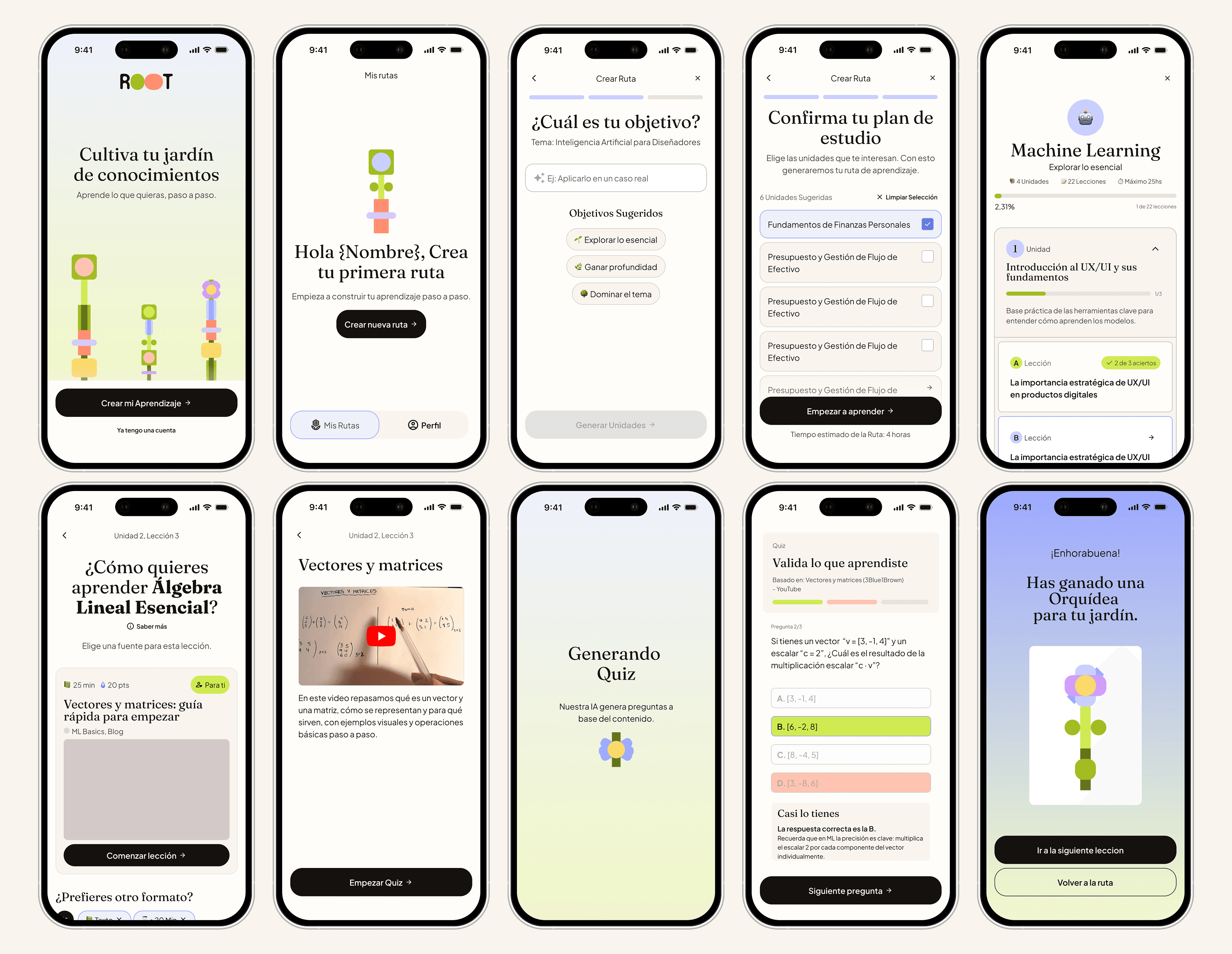
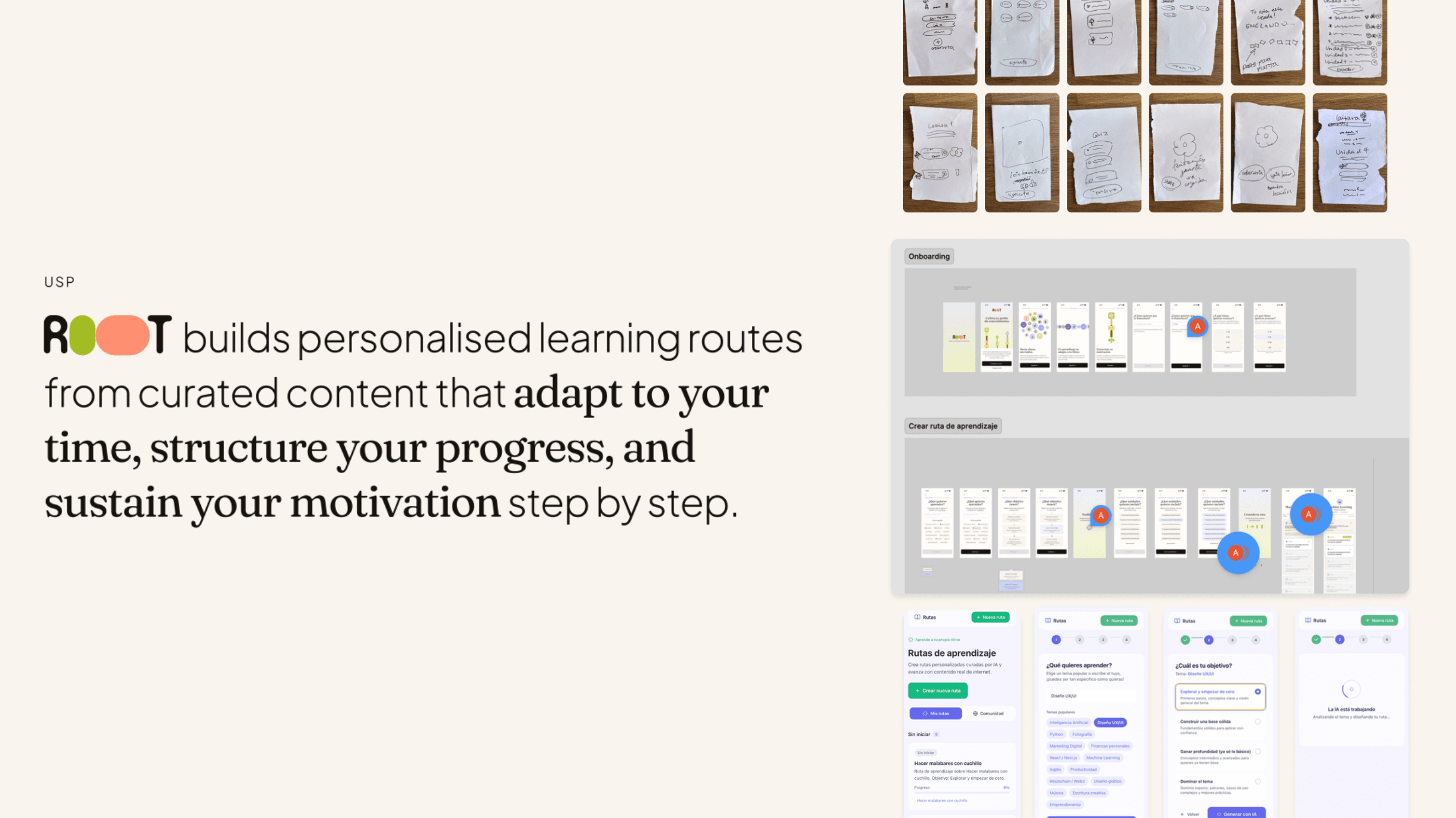
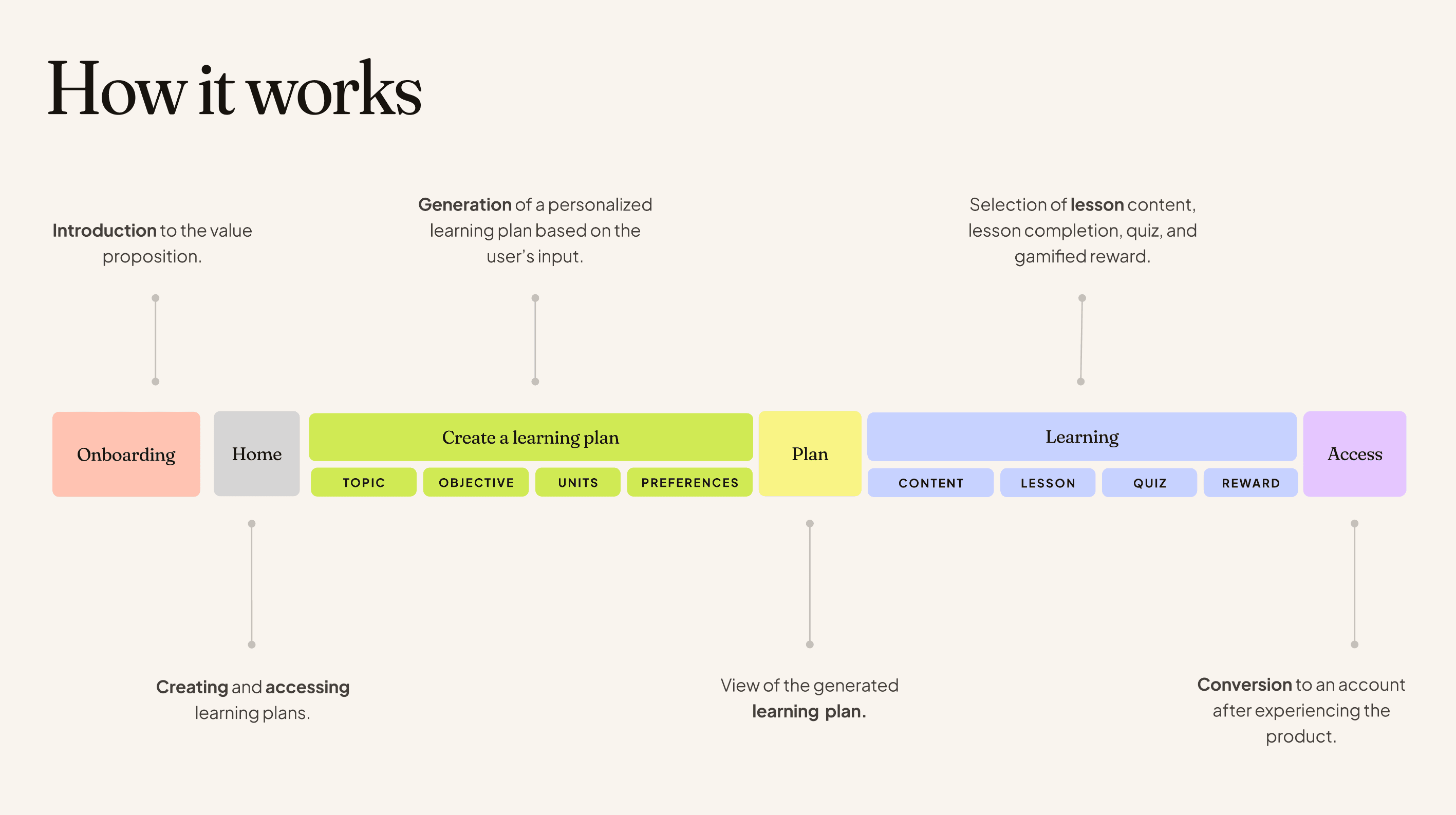
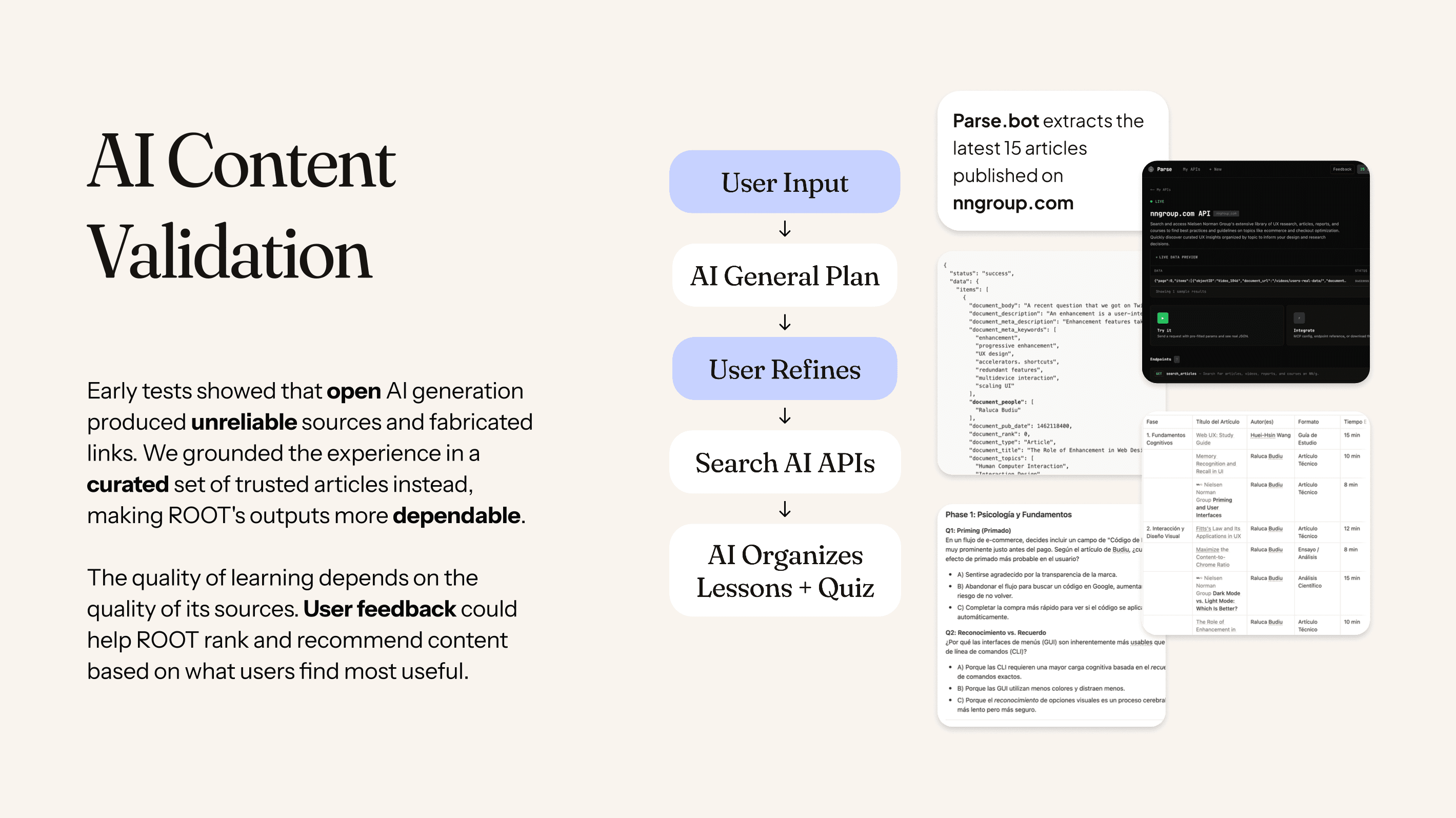
ROOT builds personalised learning plans from curated online content, shaped by each user's goal and adapted to their available time and content preferences.
Working as a team of five, we took ROOT from problem framing through research, strategy and design, developing and testing five prototypes. I contributed across the project, with particular ownership of translating research findings into product decisions and wireframes, and designing core screens.
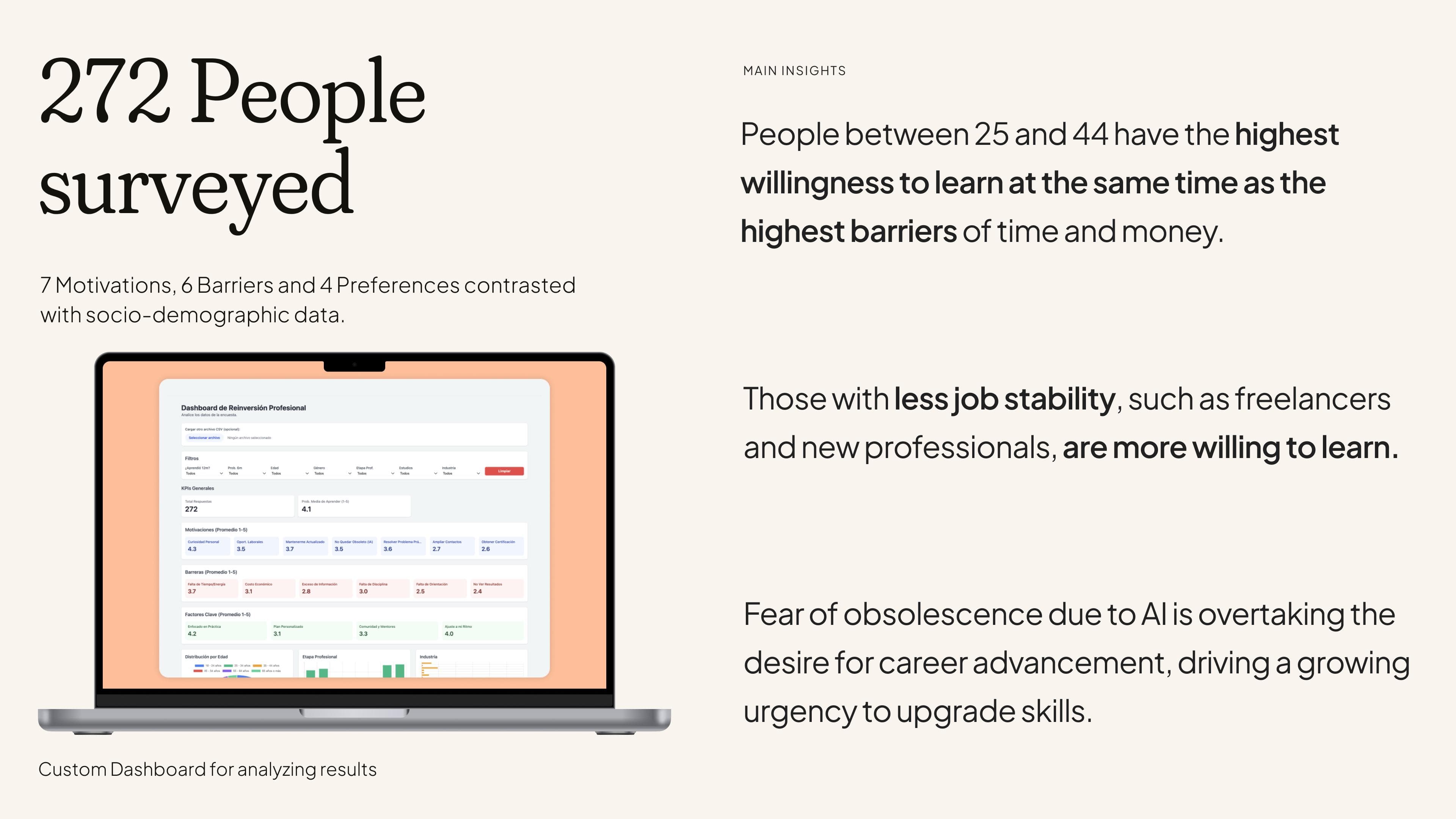
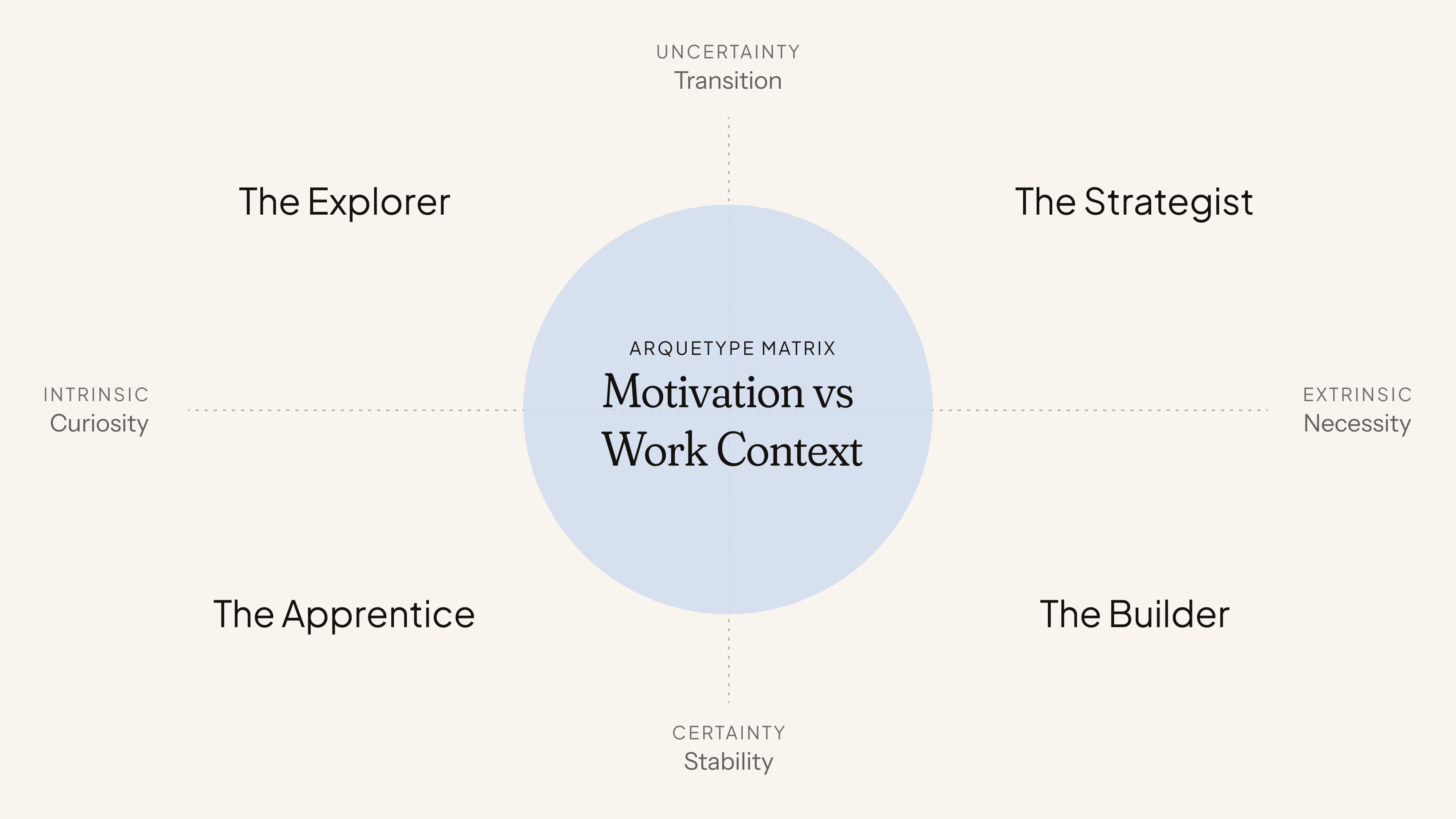
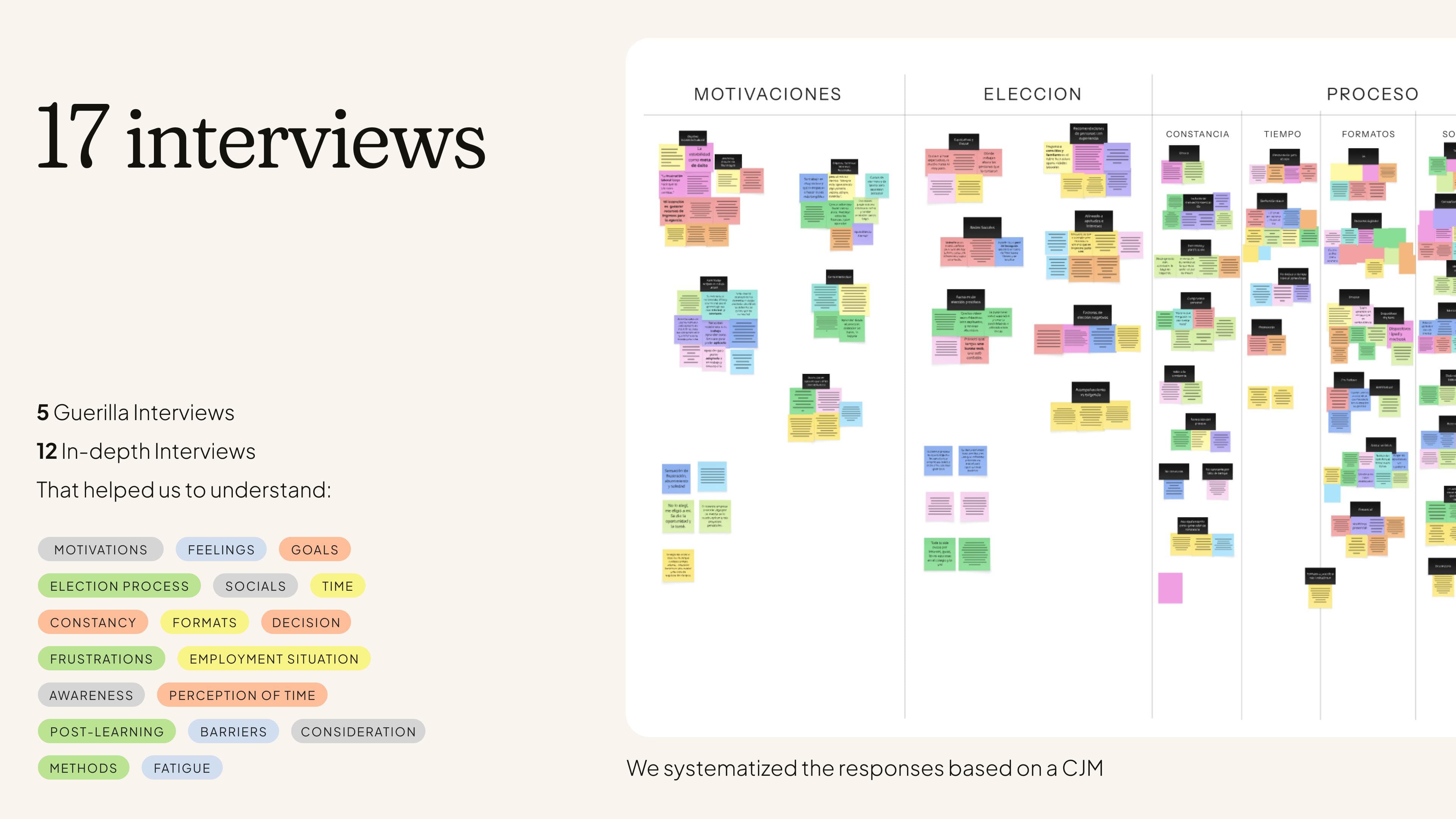
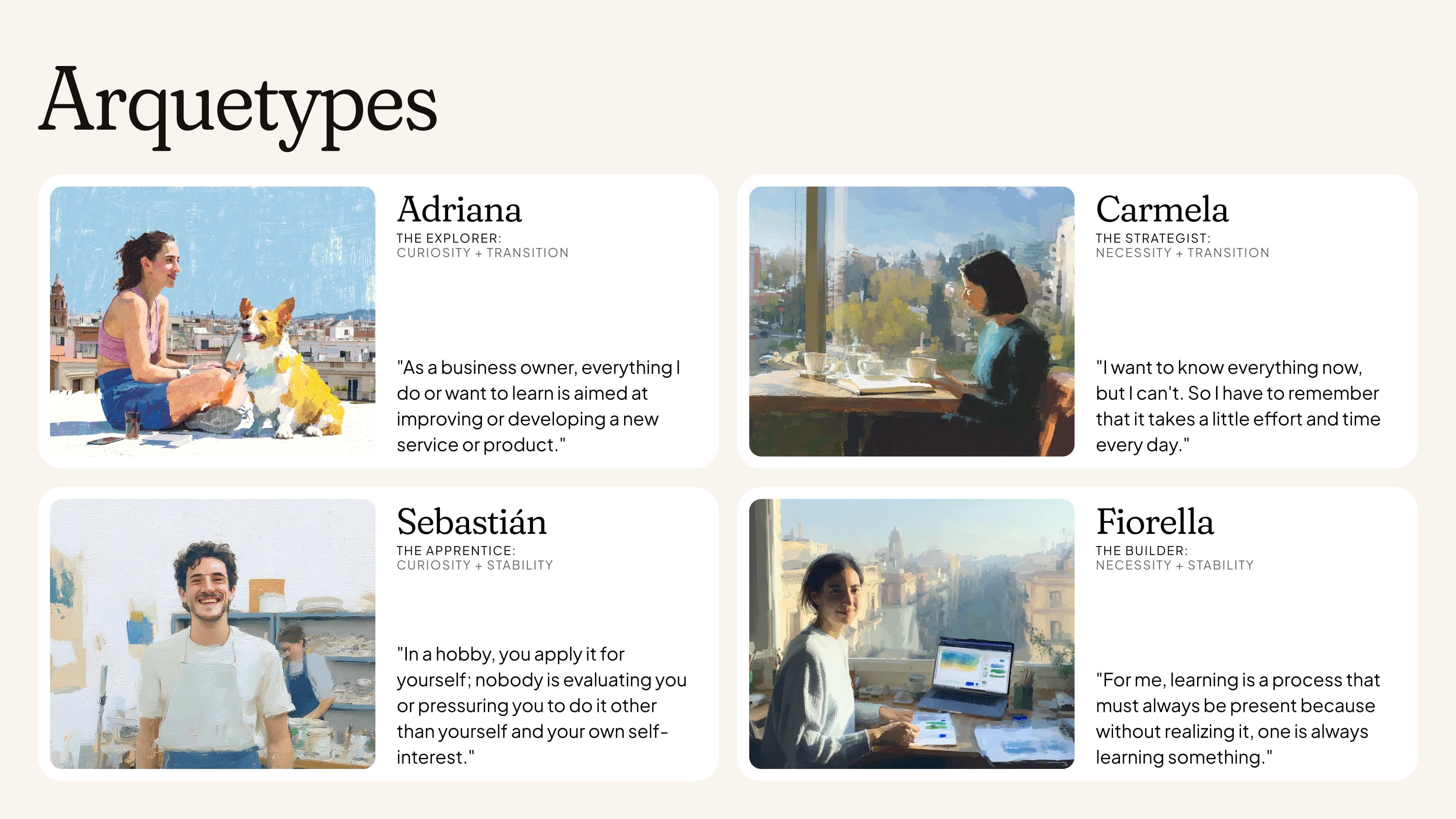
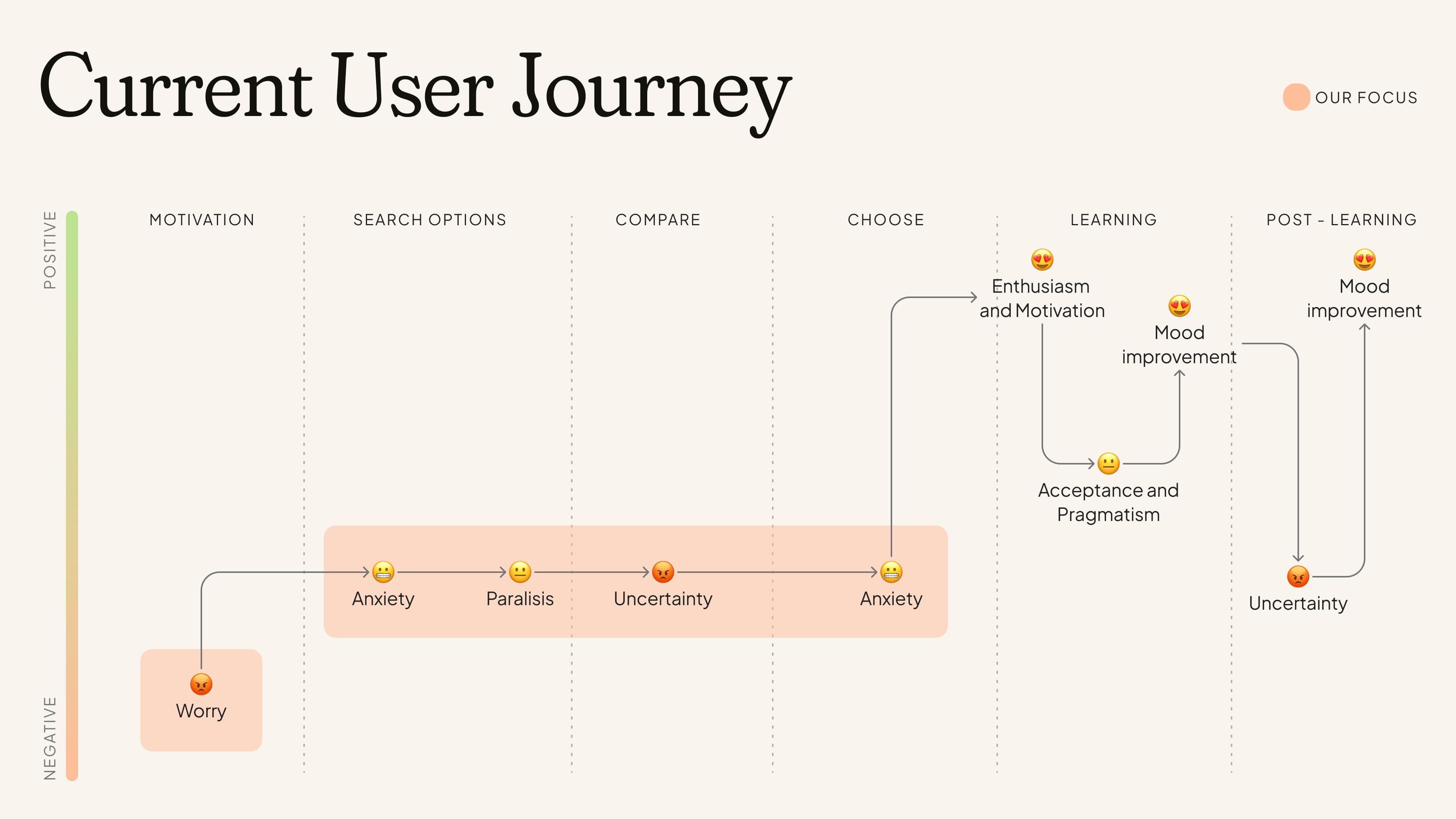
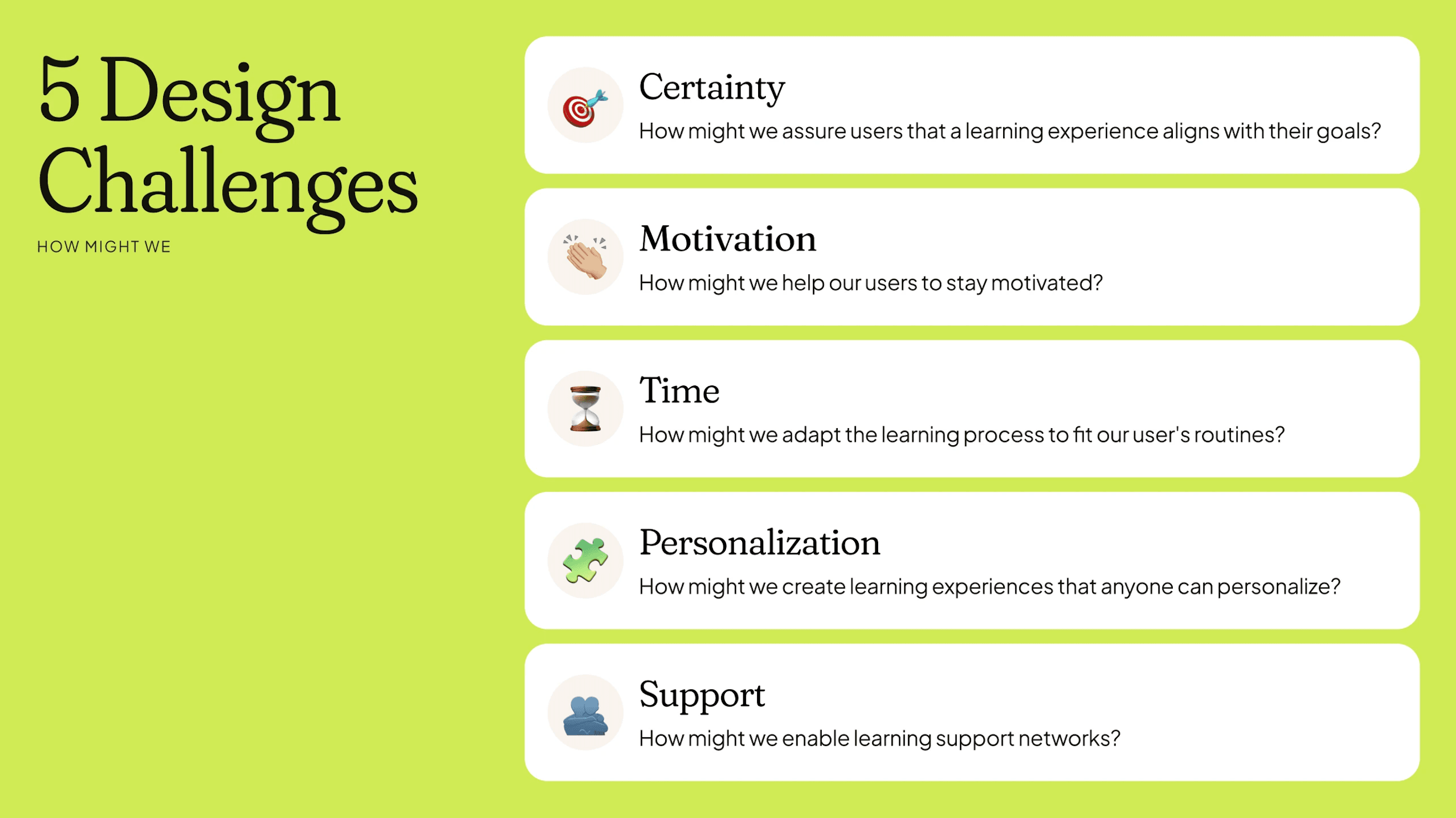
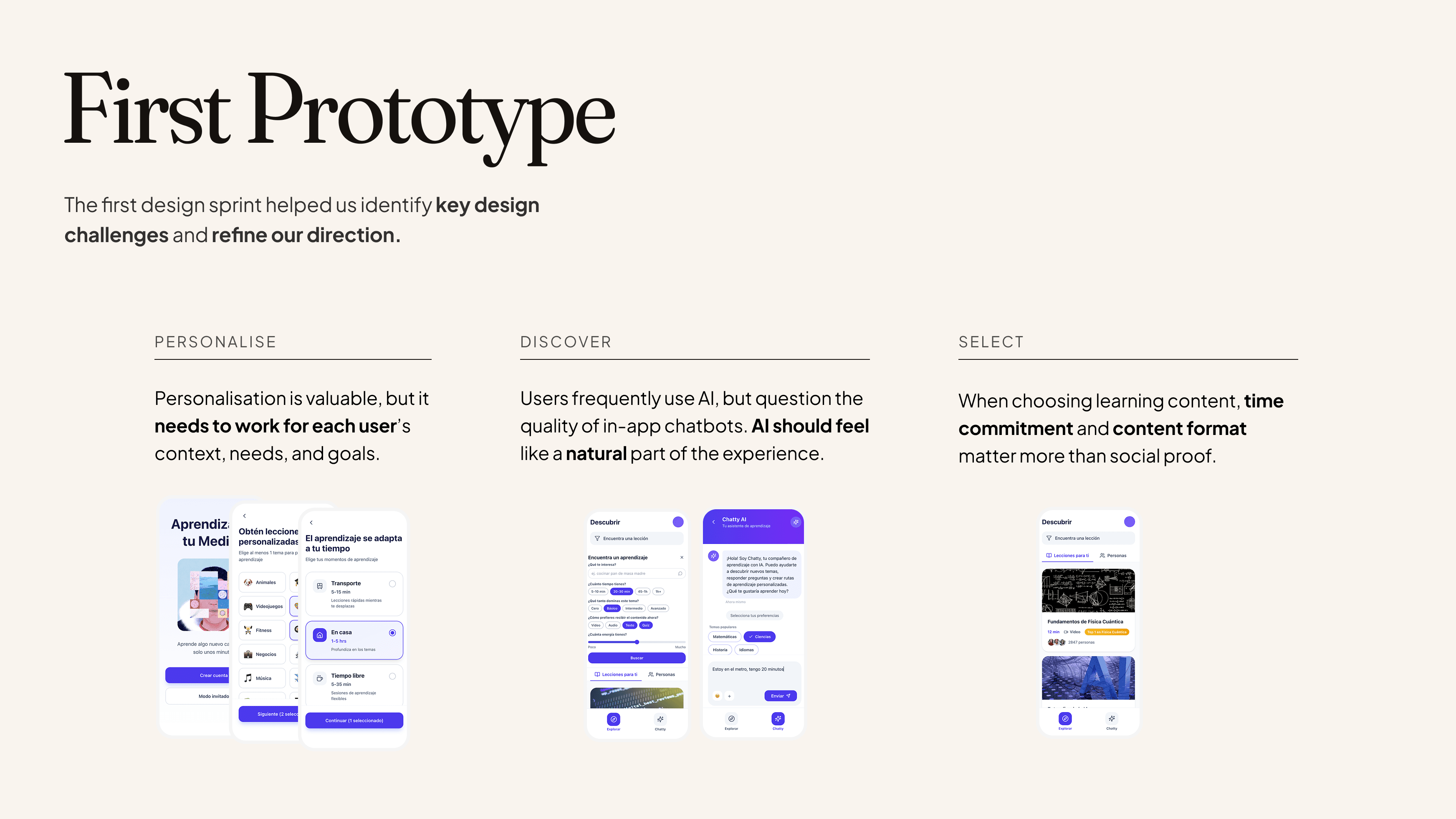
Our first design sprint explored how research-informed filters and an AI chatbot could help users find learning content suited to their needs. Testing showed that personalised content discovery was only one part of the challenge. Users also needed to understand how each piece of content contributed to their bigger learning goals, giving them the certainty that their time investment would be meaningful. This shifted our direction from personalised content discovery towards personalised learning plans, structured around what users want to learn, how they want to learn, and how much time they have.
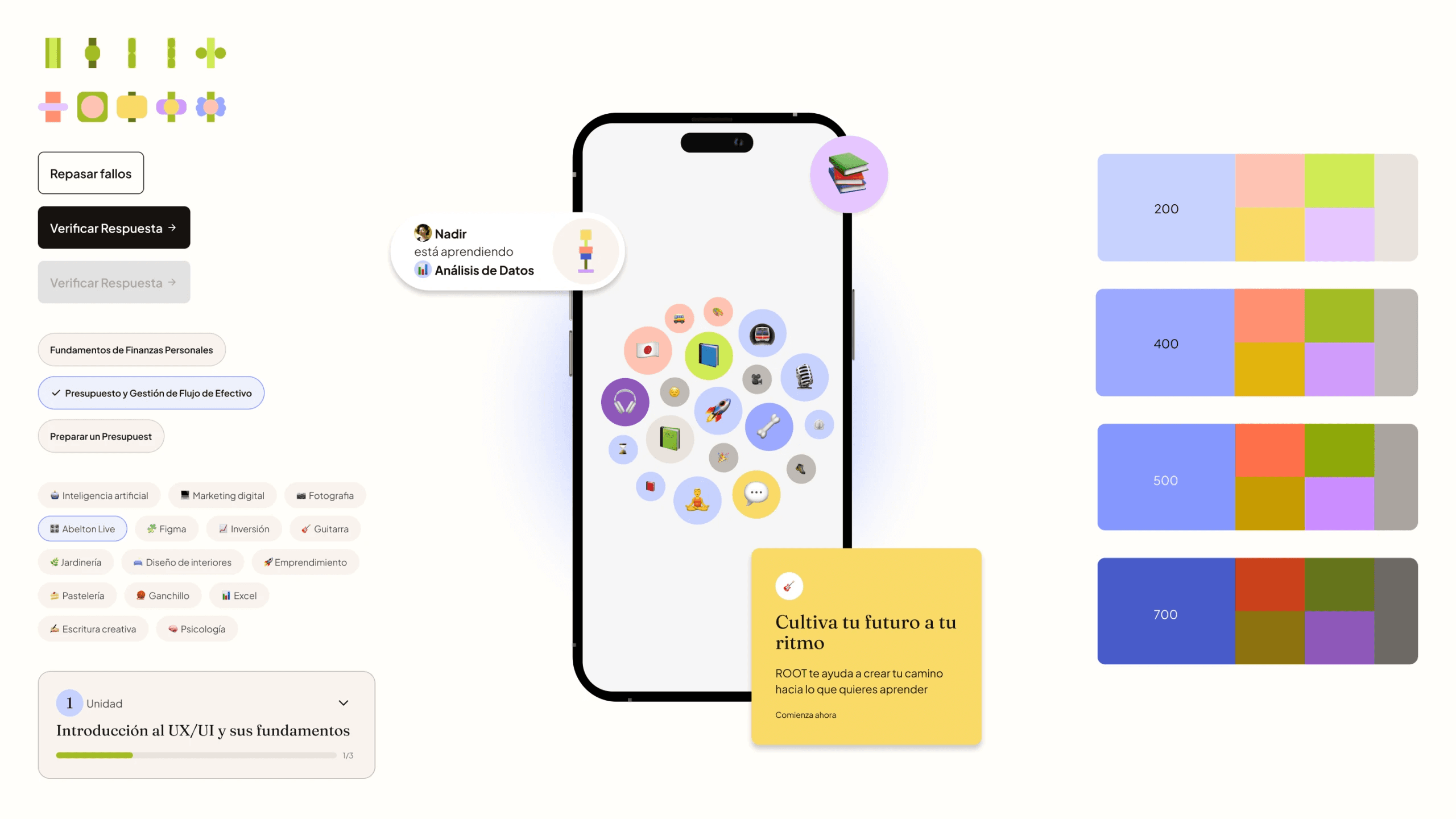
The UI is built around ROOT’s three brand values: motivation, organisation and enjoyment. Colours and illustrations draw on a garden metaphor, reflecting learning as a process of gradual growth. The UI and copy guide users, helping them understand their progress and what they can do next. Light animations, playful colours, rounded shapes and emojis keep the experience light and enjoyable. Learning should feel positive and rewarding, rather than another obligation.