LUNORA
Lunora stems from my love of Google Photos and my habit of writing down my thoughts. Inspired by features like Google Photos' Highlights and Snapchat Memories, I explored what resurfacing past moments could look like for text. Academic research into memory and reflection shaped the direction and design of the product.
Lunora is still a concept, with open questions around how the UI should adapt over time and how the resurfacing logic should work. My next step would be to test it with real users and explore how the product could evolve from there.

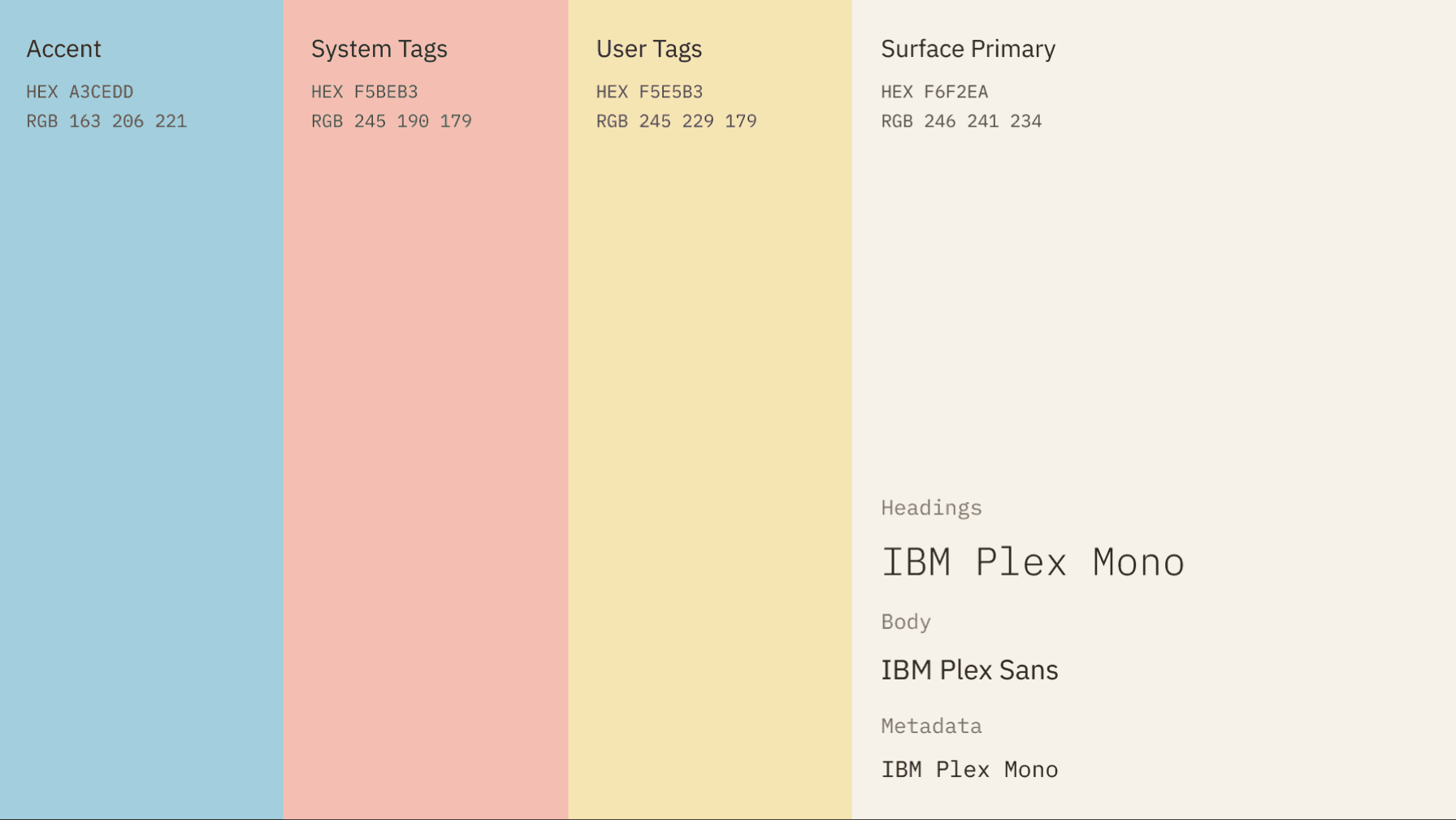
The UI is built around 3 attributes: calm, reflection, and simplicity. The warm and understated palette keeps the interface quiet, with the focus on writing and reflection rather than the UI itself. IBM Plex Sans keeps body text clear and easy to read, while IBM Plex Mono brings a structured, distinctive touch to headers and metadata.
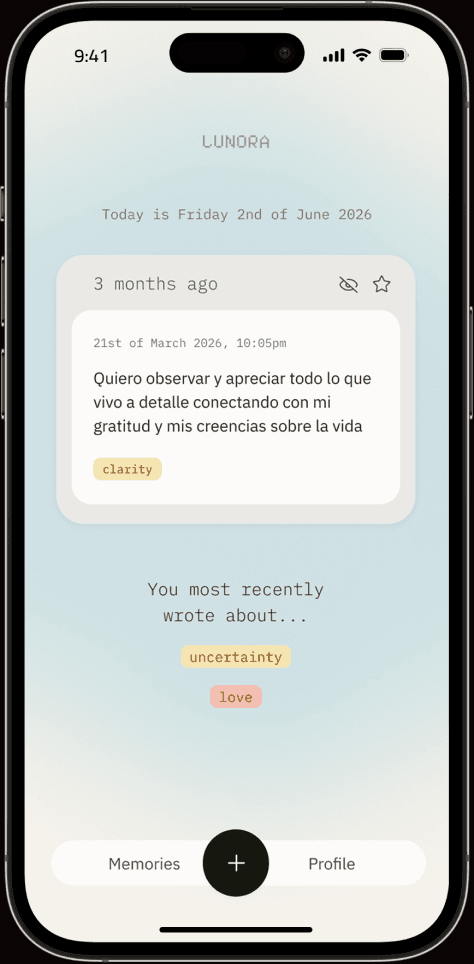
A notification alerts the user when a new memory resurfaces, shown on Home along with the two tags most recently used. Each resurfaced entry can be starred to revisit later, or hidden so it doesn't resurface again.
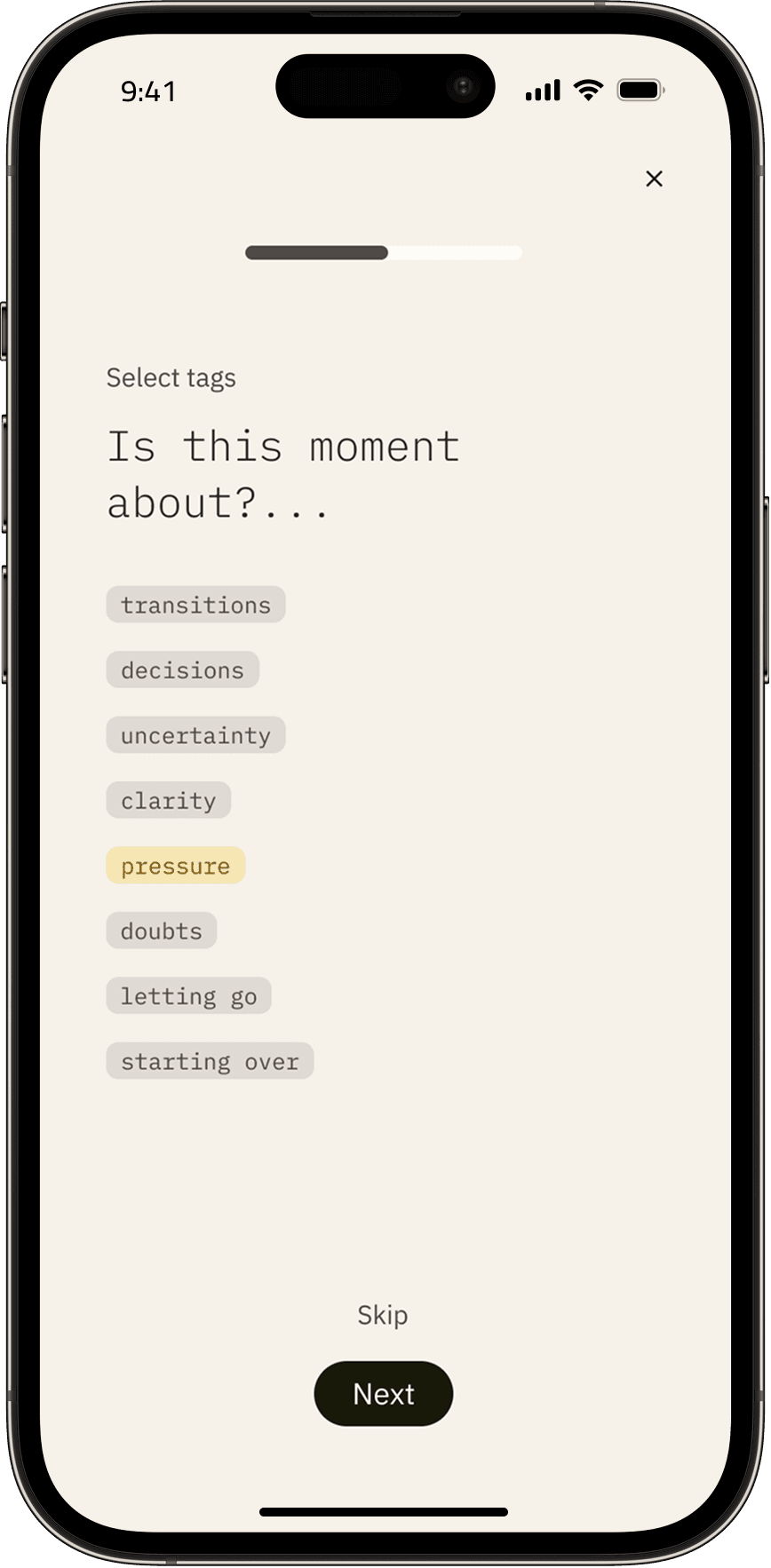
Before writing, the user can select a tag to aid future resurfacing. Tags also work as a subtle prompt, reducing blank-page paralysis. This step can be skipped, and tags can always be edited later.
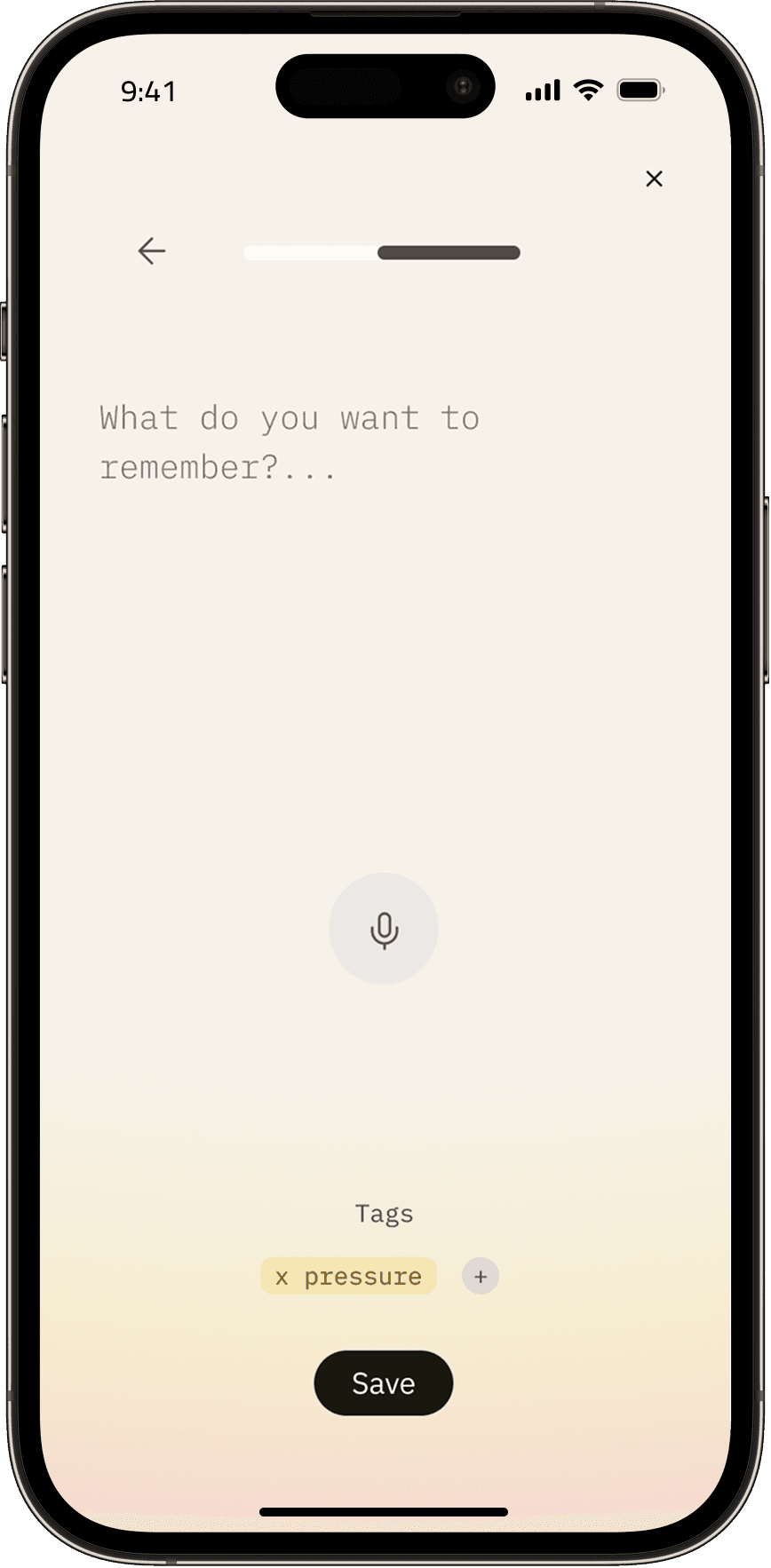
The placeholder text is designed to reduce blank-page paralysis. Beyond that, the screen stays simple, keeping focus on the act of writing. Voice-to-text is highlighted to make storing reflections as easy as speaking.
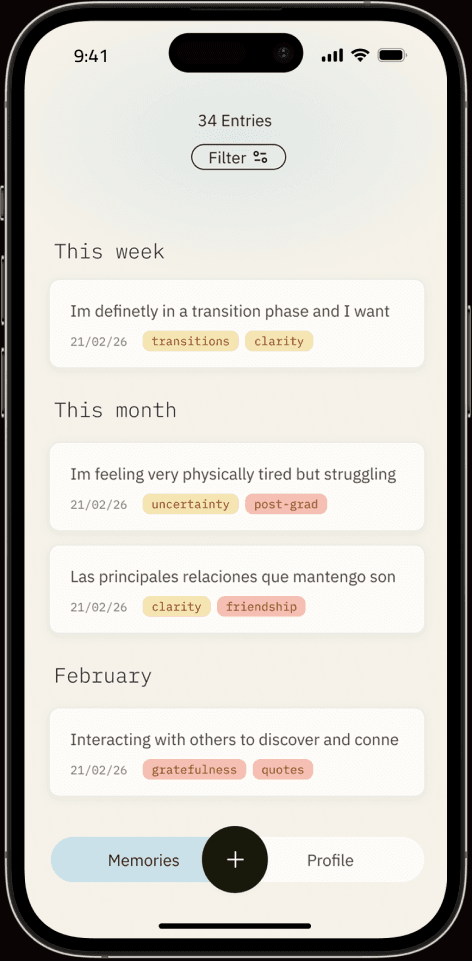
All entries are saved in Memories, organized by recency with visible tags to help jog memory over time.